
Marble Covered Jute Journal – Kesey
$22.00
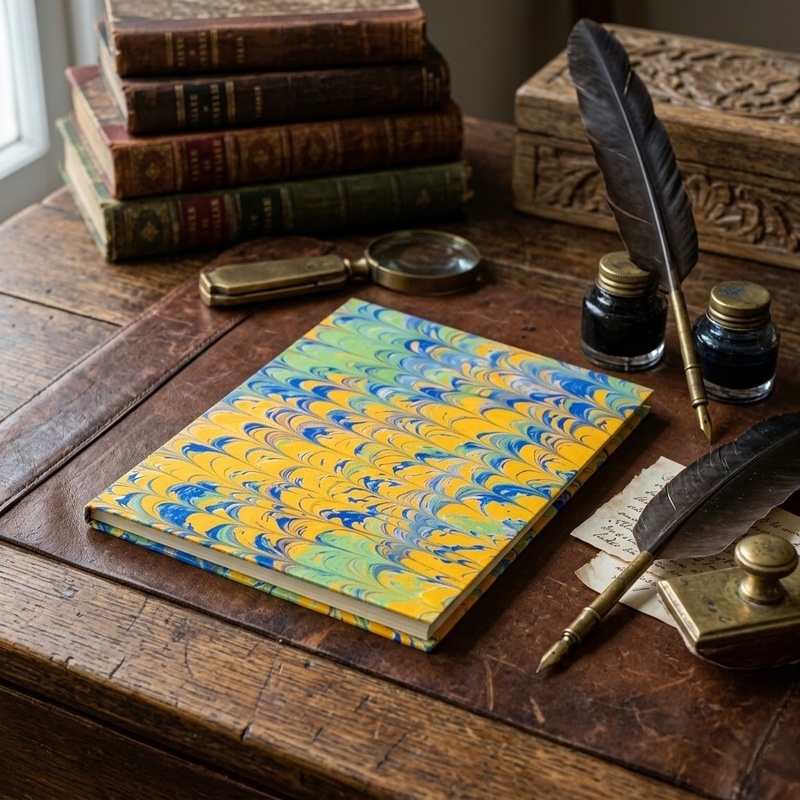
These handcrafted marbled, hard-covered jute journals,
showcase traditional techniques in jute paper making, combining the art of
marbling design.
The journal measures 23cm x 17cm, features 60 pages and is a Fair Trade Product of Bangladesh.
In Bangladesh, marbling has been traditionally used in the
creation of decorative papers for various purposes, including book covers,
calligraphy, and other artistic endeavours. Our marbled cover journals are
characterised by vibrant colours and intricate patterns.
The colour pigments are manipulated using tools such as
combs, brushes, or sticks to create various patterns and then the paper is
gently pressed onto the surface of the liquid to pick up the design.
Each journal cover is different with the colourway depicted
in the picture.
When it comes to the jute paper, artisans convert jute
fibre into a pulp to create richly textured, 100% tree-free paper pages with a
uniquely soft feel.
Fair Trade is a system of
certification that aims to ensure a set of standards are met in the production
and supply of a product or ingredient. For farmers and workers, Fair Trade
means workers’ rights, safer working conditions and fairer pay. For shoppers it
means high quality, ethically produced products.
When you purchase Fair Trade products, you're contributing
to higher global standards for people and the planet. With every purchase, you
help create a world where producers can treat our global family ethically while
offering sustainable products. Fair Trade certification requires a minimum
price for products.
Fair trade is an arrangement designed to help producers in
growing countries achieve sustainable and equitable trade relationships. The
Fair Trade movement combines the payment of higher prices to exporters with
improved social and environmental standards. The movement focuses in particular
on commodities, or products that are typically exported from developing
countries to developed countries, but is also used in domestic markets (e.g.,
Brazil, the United Kingdom, and Bangladesh), most notably for handicrafts,
coffee, cocoa, wine, sugar, fruit, flowers, and gold.